internal tools
2026the daily drivers, rebuilt to fit
the software i use every day, remade to fit exactly how i work rather than how the average person does: a vector database, dictation, screen recording and demo editing. each one only as general as it needs to be for one user, and all of it running on my own machine.
needledb
a self-hostable vector database with Pinecone's API, on FAISS
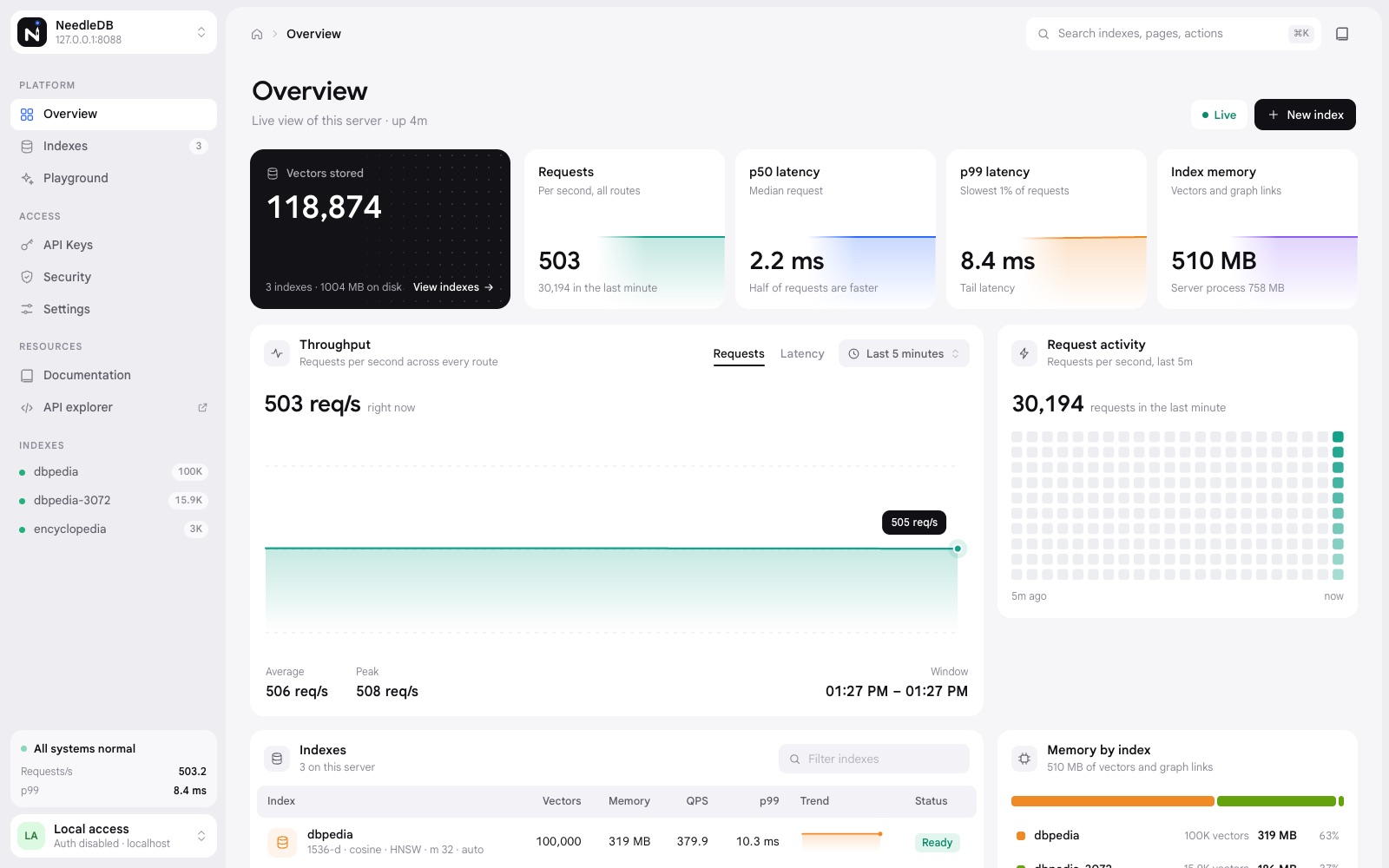
I wanted Pinecone's API without Pinecone: one process with a REST API, a dashboard, durable storage and metadata filters, which the official Pinecone client can point at unchanged. Flat search for small collections, HNSW for large ones, and the switch happens in the background at 20k vectors without blocking reads.
The part I care about is that filters keep their recall. A planner looks at how selective a filter is and answers a narrow one with an exact scan of the matches and a wide one with filtered HNSW and a widened beam. Every write lands in a SQLite write-ahead log before it is acknowledged, so a crash replays only what came after the last index snapshot.
For these shots I loaded 100,000 real DBpedia articles with their OpenAI embeddings, a 3,072-d copy and 3,000 articles embedded on the machine by a local model, then drove it with 16 clients: 80,336 requests in 150 seconds, 536 a second, no errors.
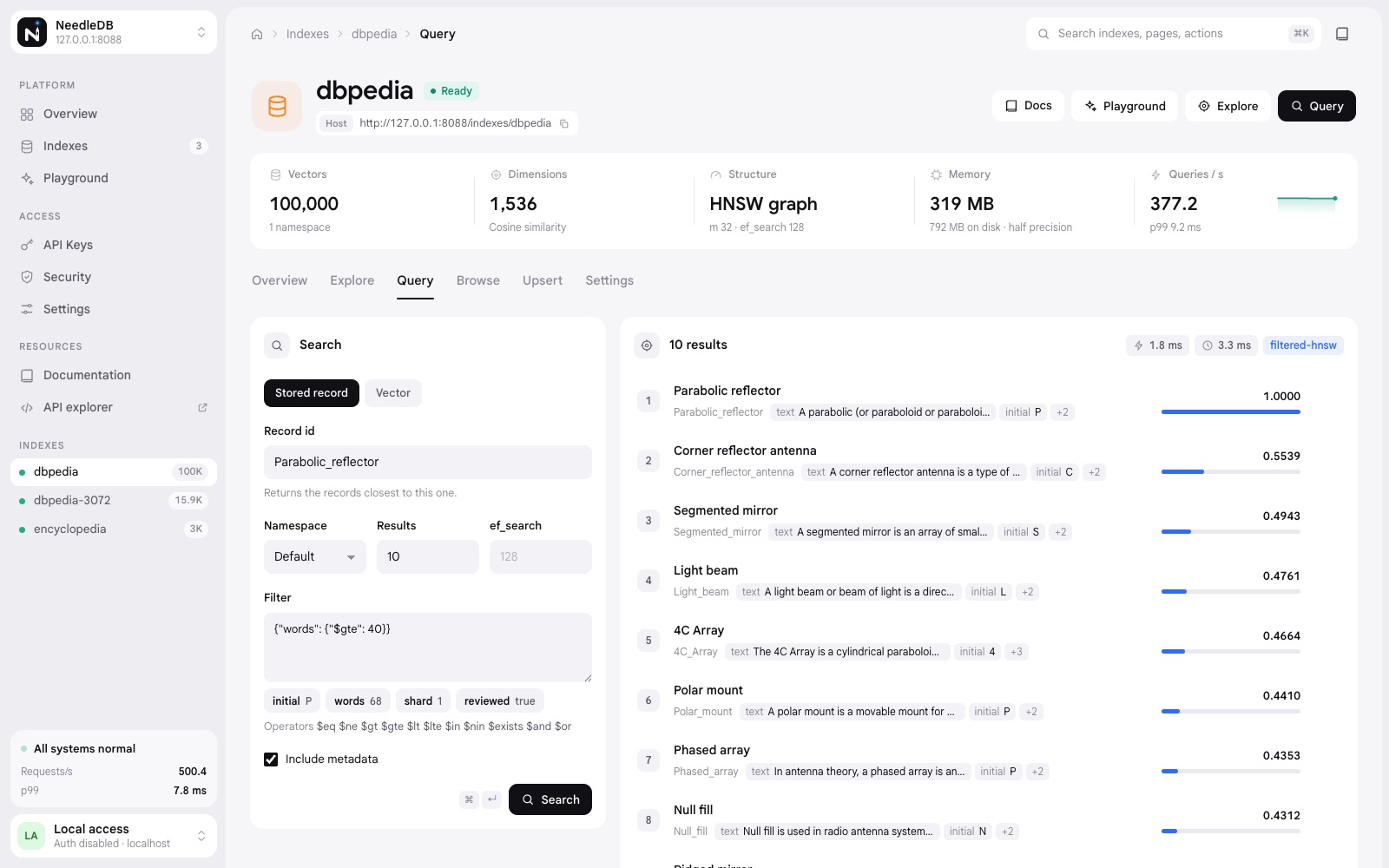 neighbours of a stored article, filtered · 1.8 ms
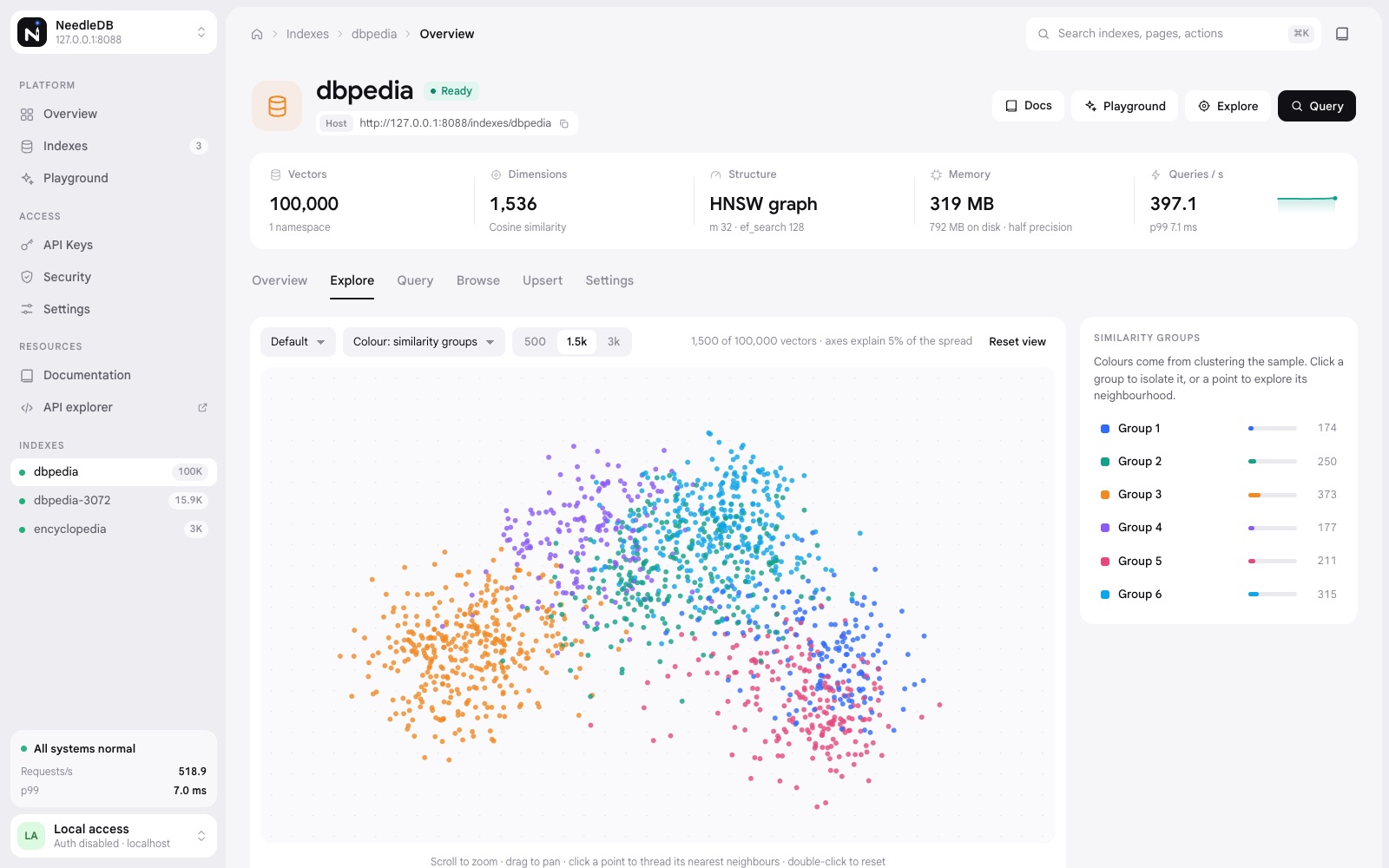 the 100k index laid out by similarity
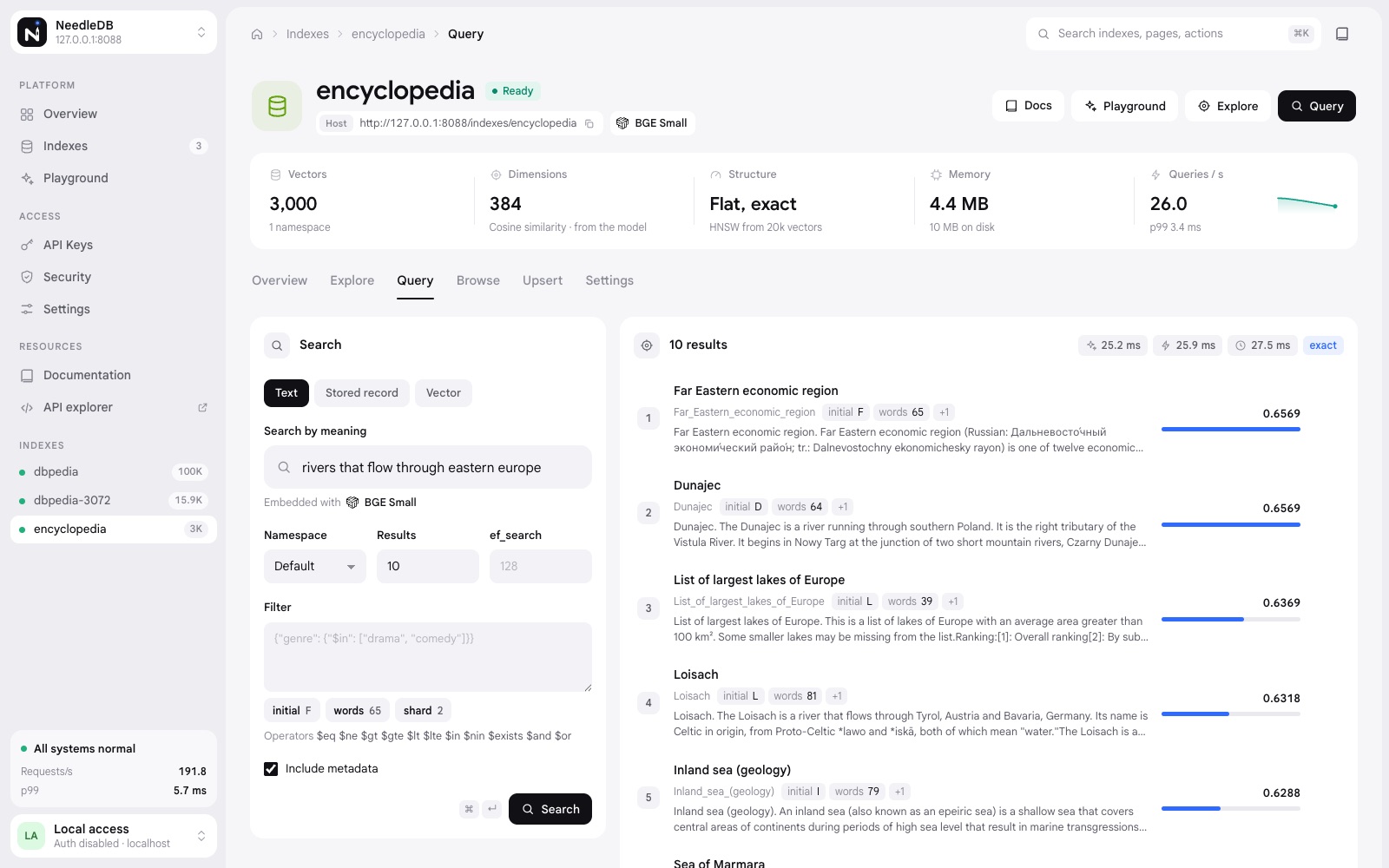 typed search on a locally embedded index
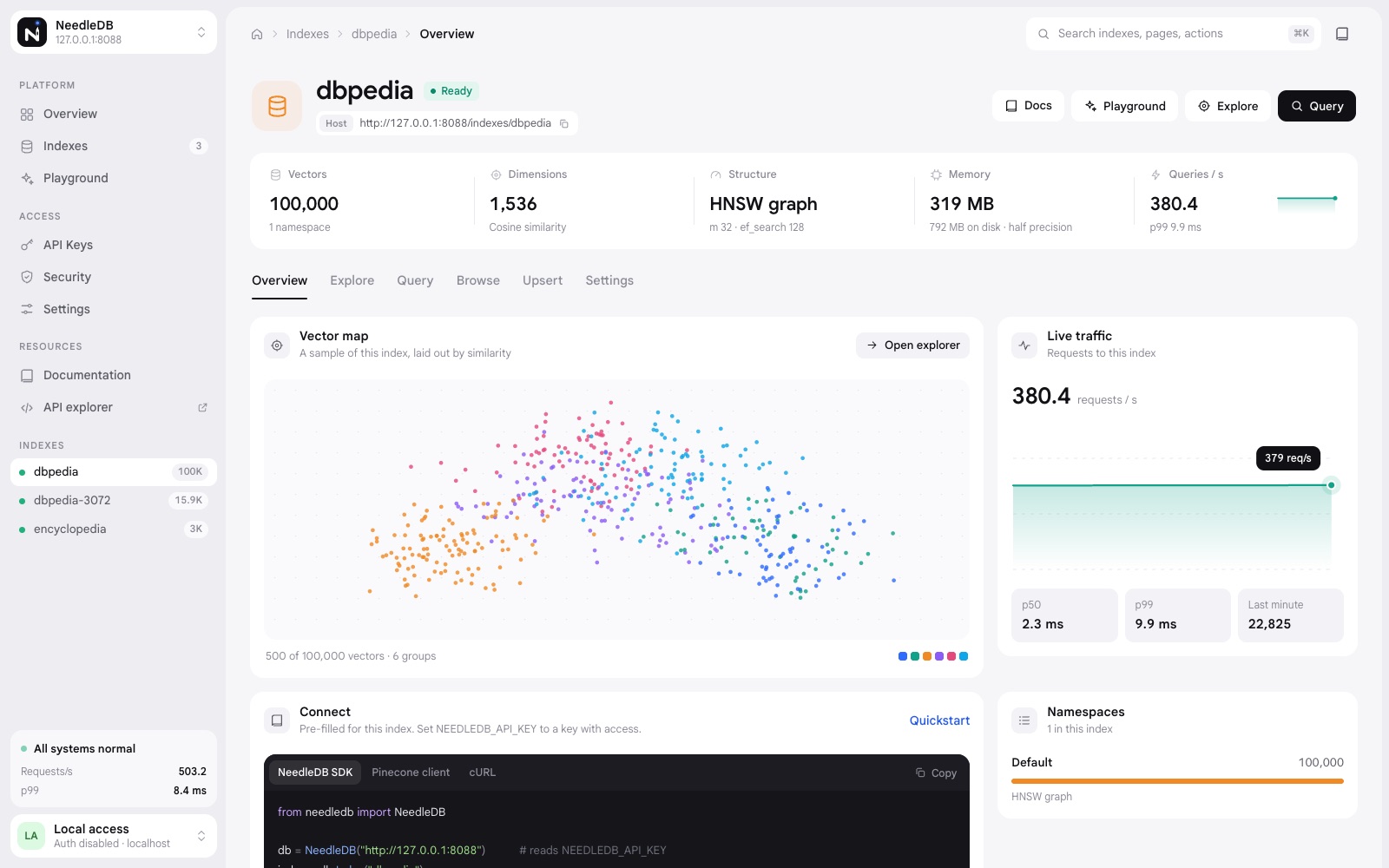 one index · HNSW, half precision, live traffic
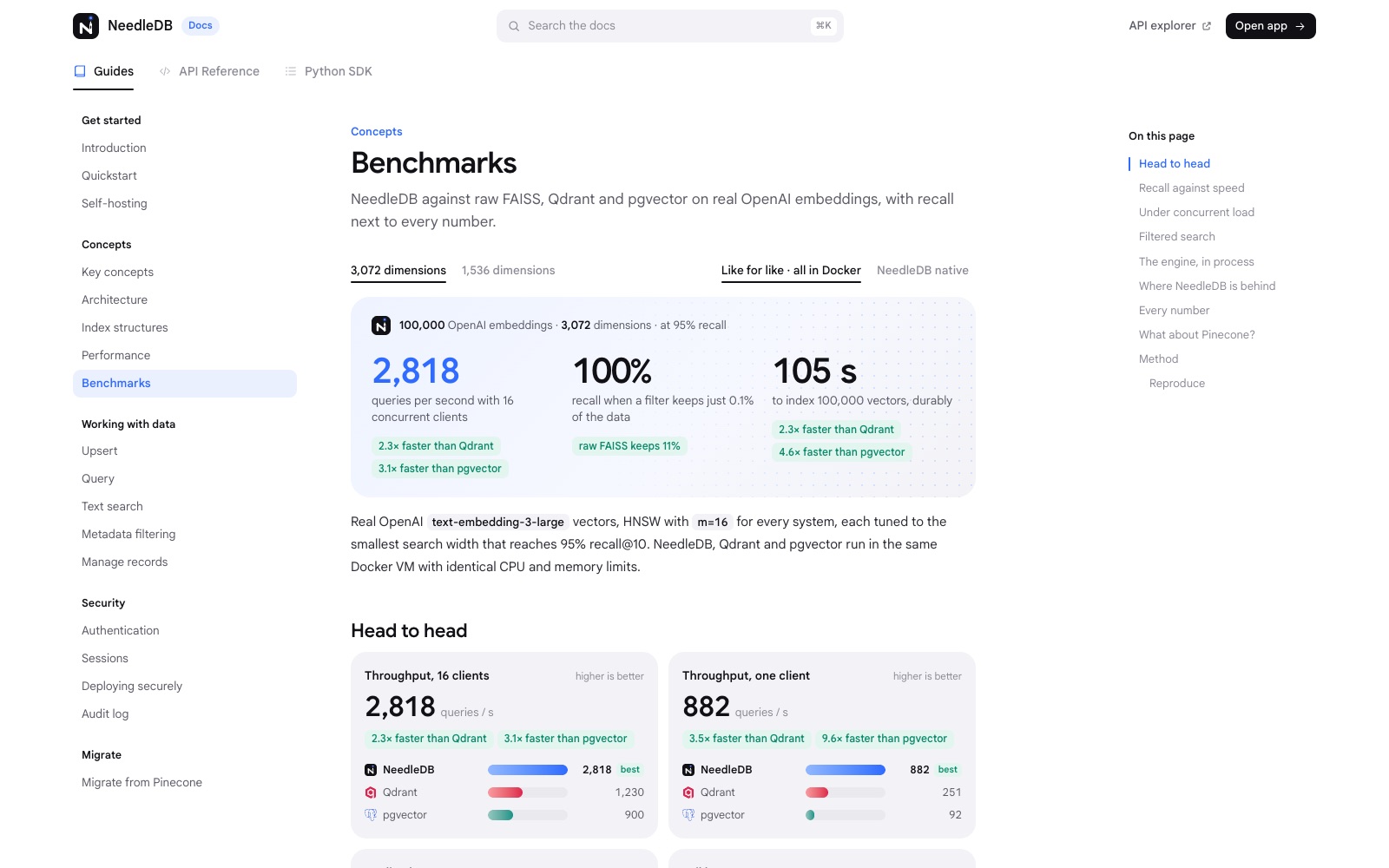 benchmarks against Qdrant and pgvector
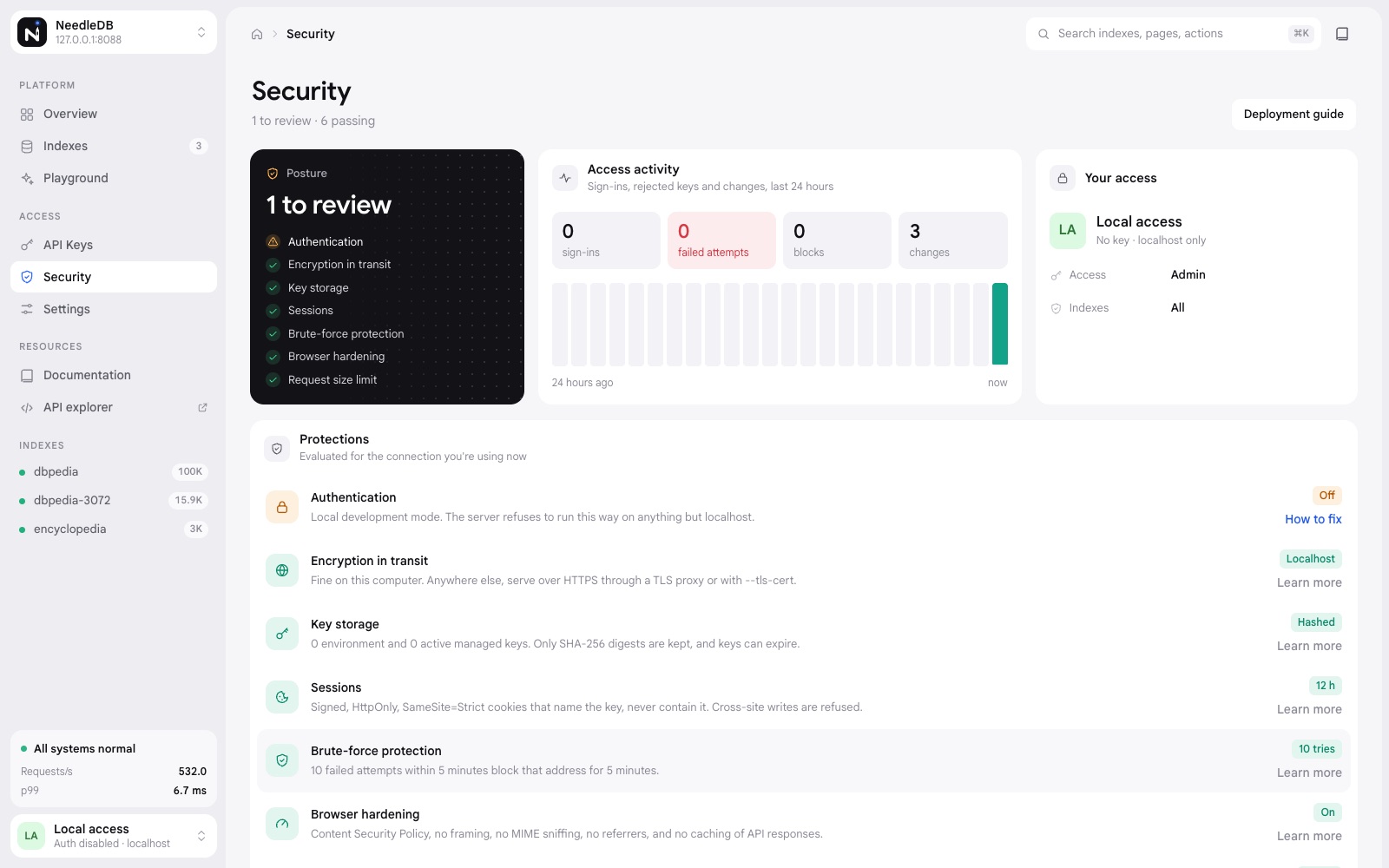 security posture, evaluated per connection
yapper
local dictation for macOS: hold a key, talk, text appears
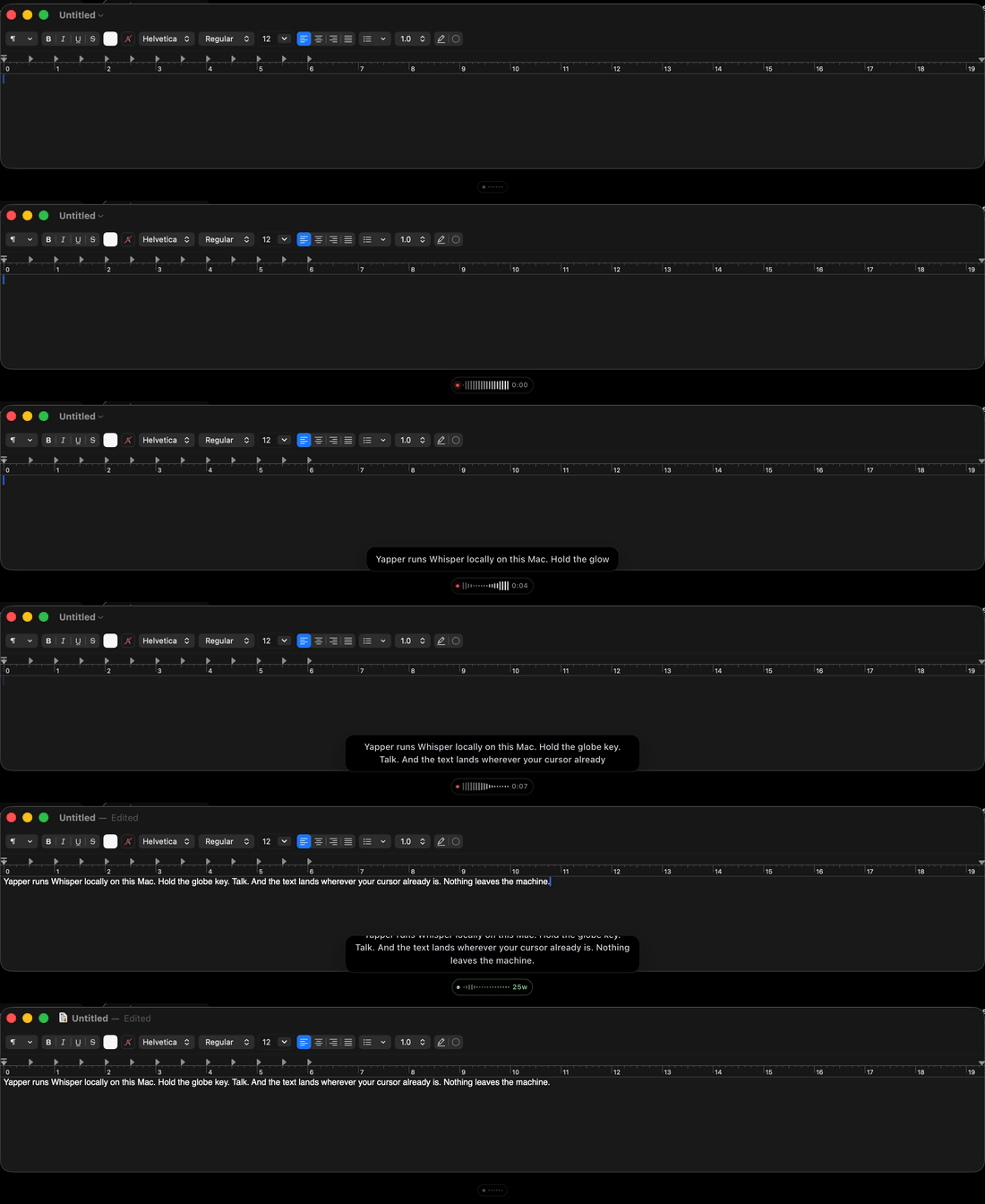
Most local dictation records everything and transcribes when you stop, so you pay the whole decode at the worst moment. Yapper decodes while you talk: a voice-activity detector finds phrase boundaries, each finished phrase is decoded in the background, and on release only the last phrase is still outstanding.
Whisper's encoder runs over a fixed 30 second window however short the clip, so a one second phrase costs almost as much as a long one. Sizing that window to the audio took the final pass from 1,410 ms to 600 ms. The model stays loaded in a persistent Metal sidecar, and nothing leaves the machine.
tape
a local-first screen recorder and motion editor
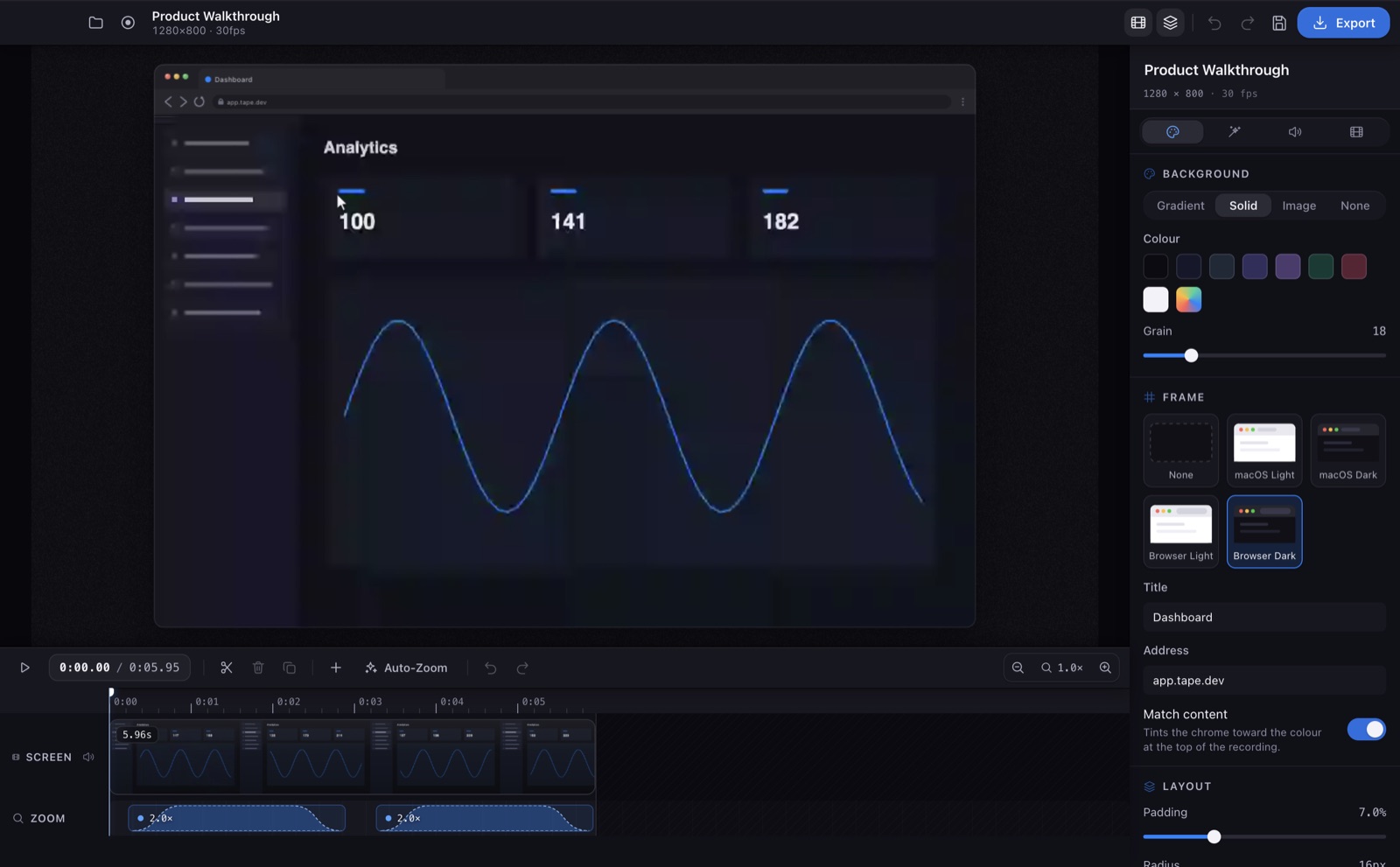
Record a screen or a window, then turn it into something that looks designed: zooms that follow the cursor into the action, window frames, backgrounds, and a real cut, trim and speed timeline. Auto-zoom regenerates without touching the zooms you placed by hand.
Recordings live in the browser's own database on the machine. Nothing is uploaded, which is the whole reason it exists instead of a subscription.
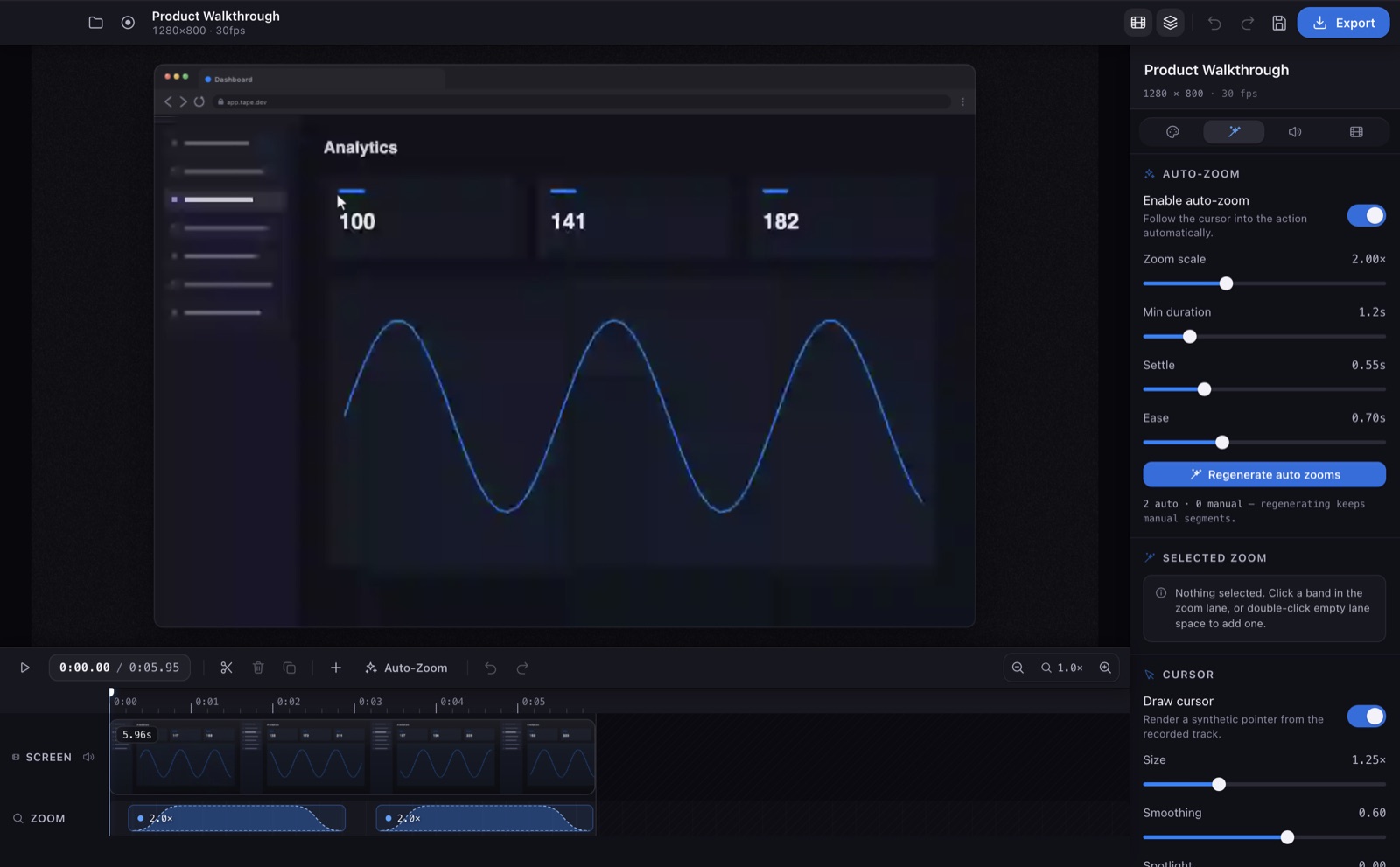 auto-zoom and a synthetic cursor
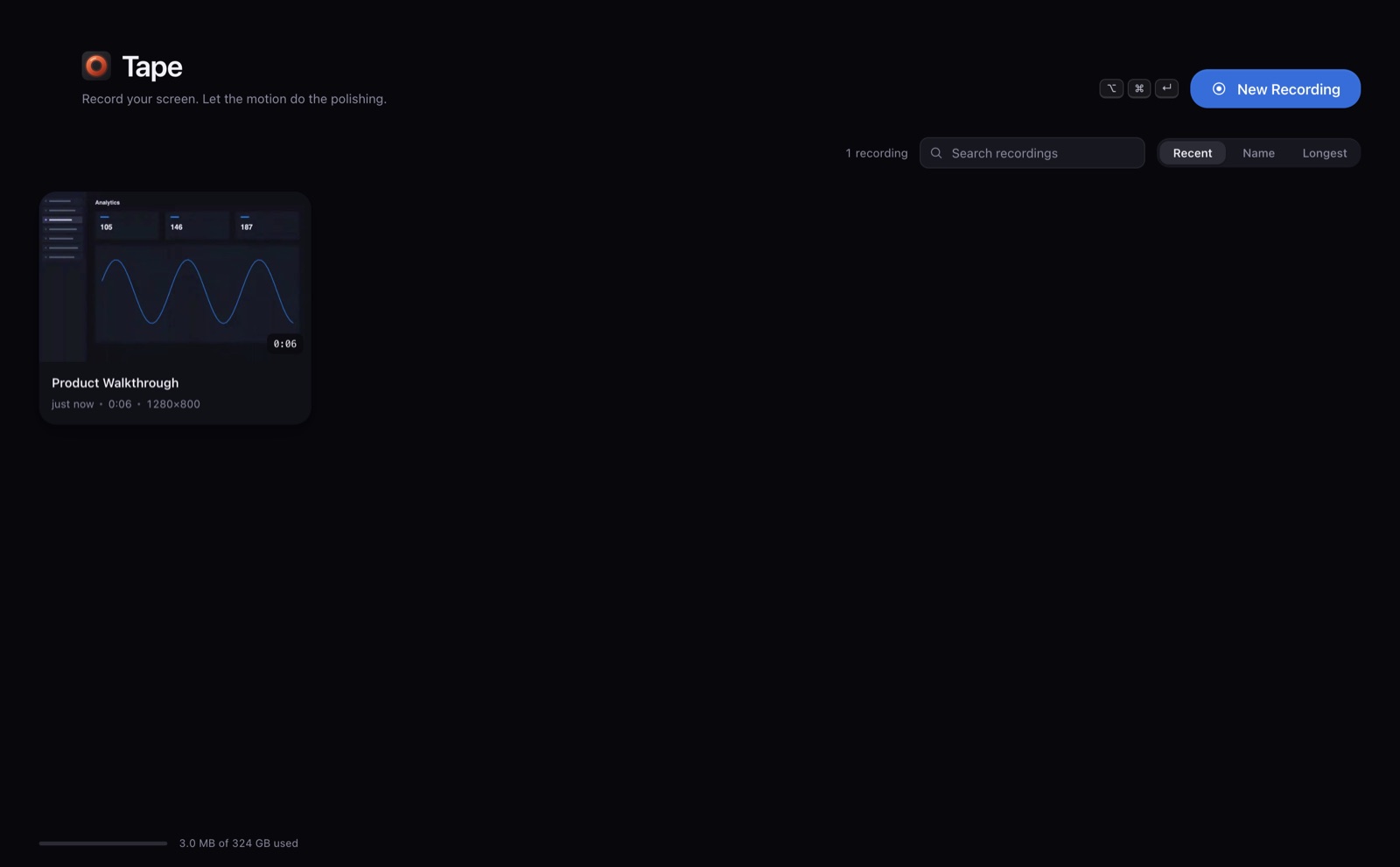 the library
demoedit
a demo video studio for app recordings
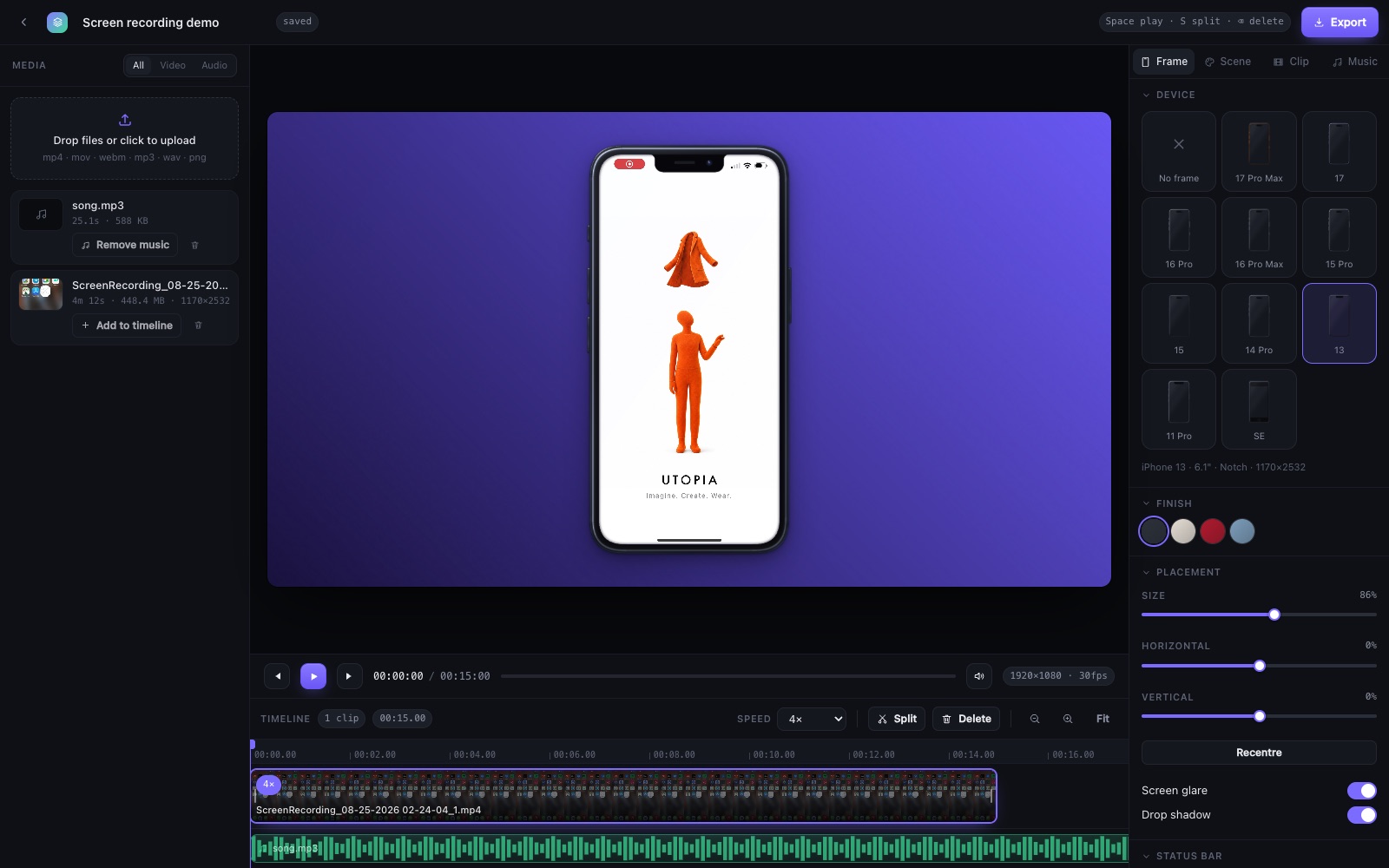
Drop in a phone screen recording, cut it on a timeline, speed clips up, score it with a song, and wrap it in a real iPhone frame centred on a 16:9 canvas. It renders an mp4 locally with ffmpeg.
A Next.js editor over a FastAPI backend, with a Playwright suite that drives every flow end to end and saves a screenshot at each step, which is where these came from.
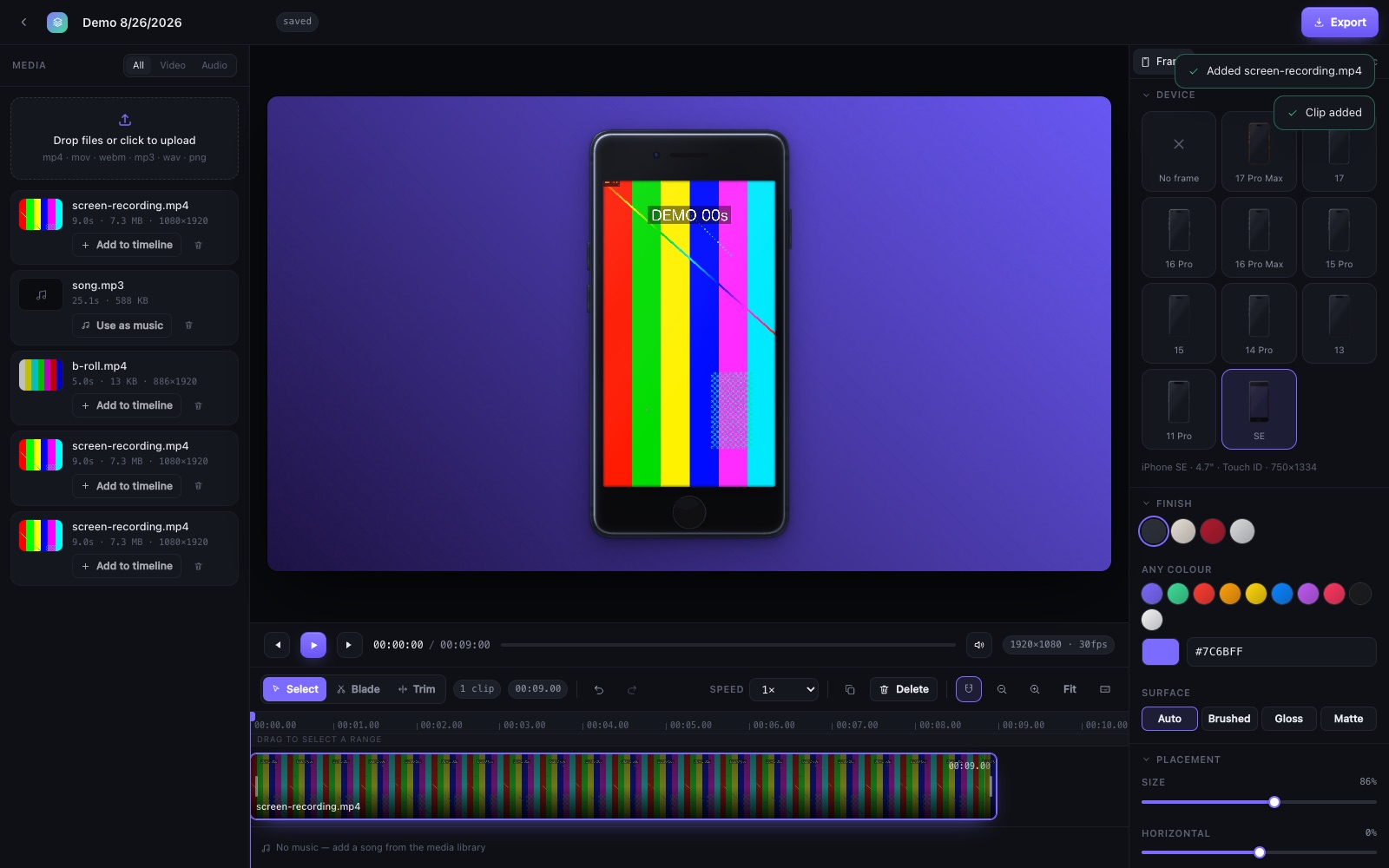 device frames, finishes and colours
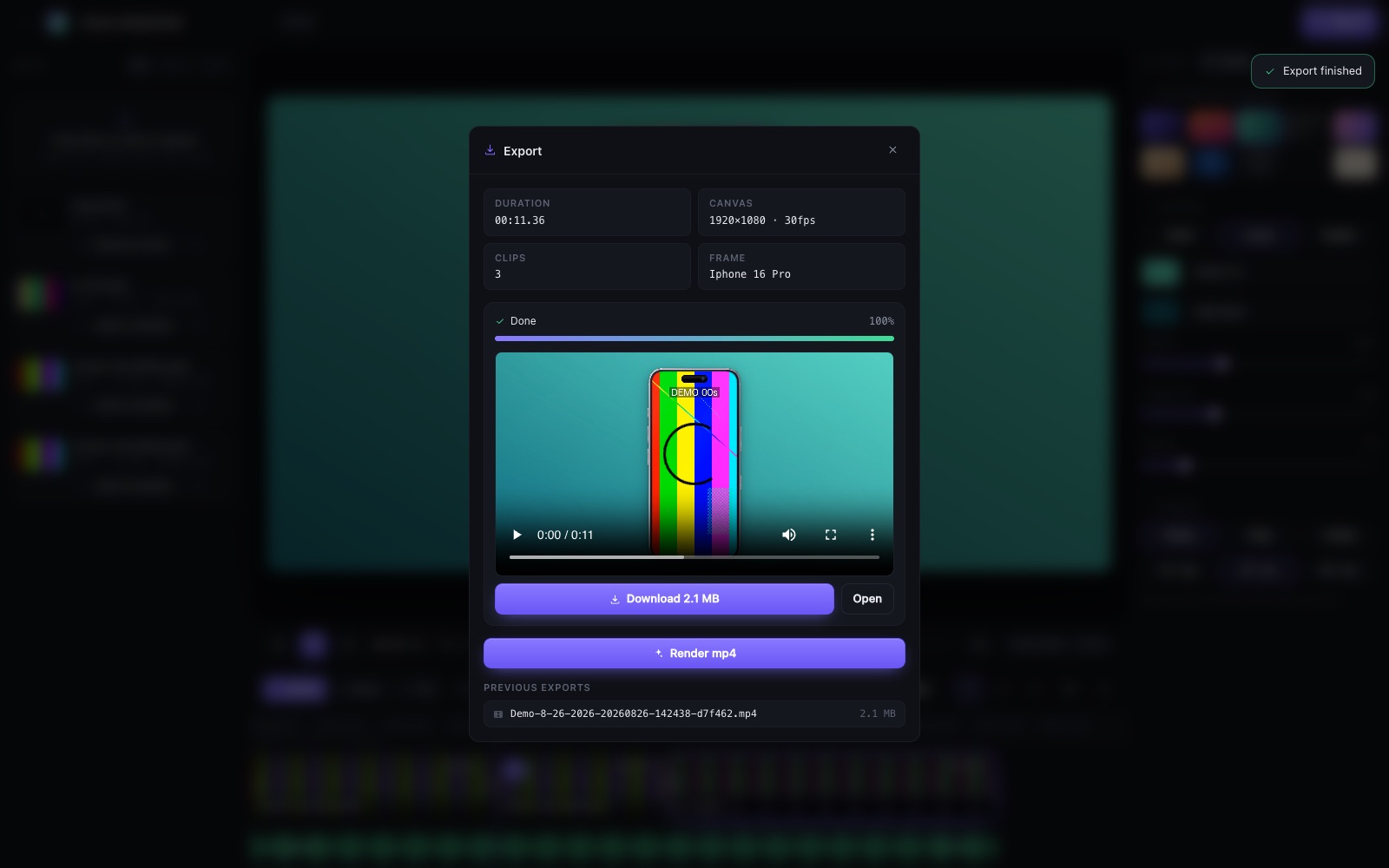 an export, rendered with ffmpeg
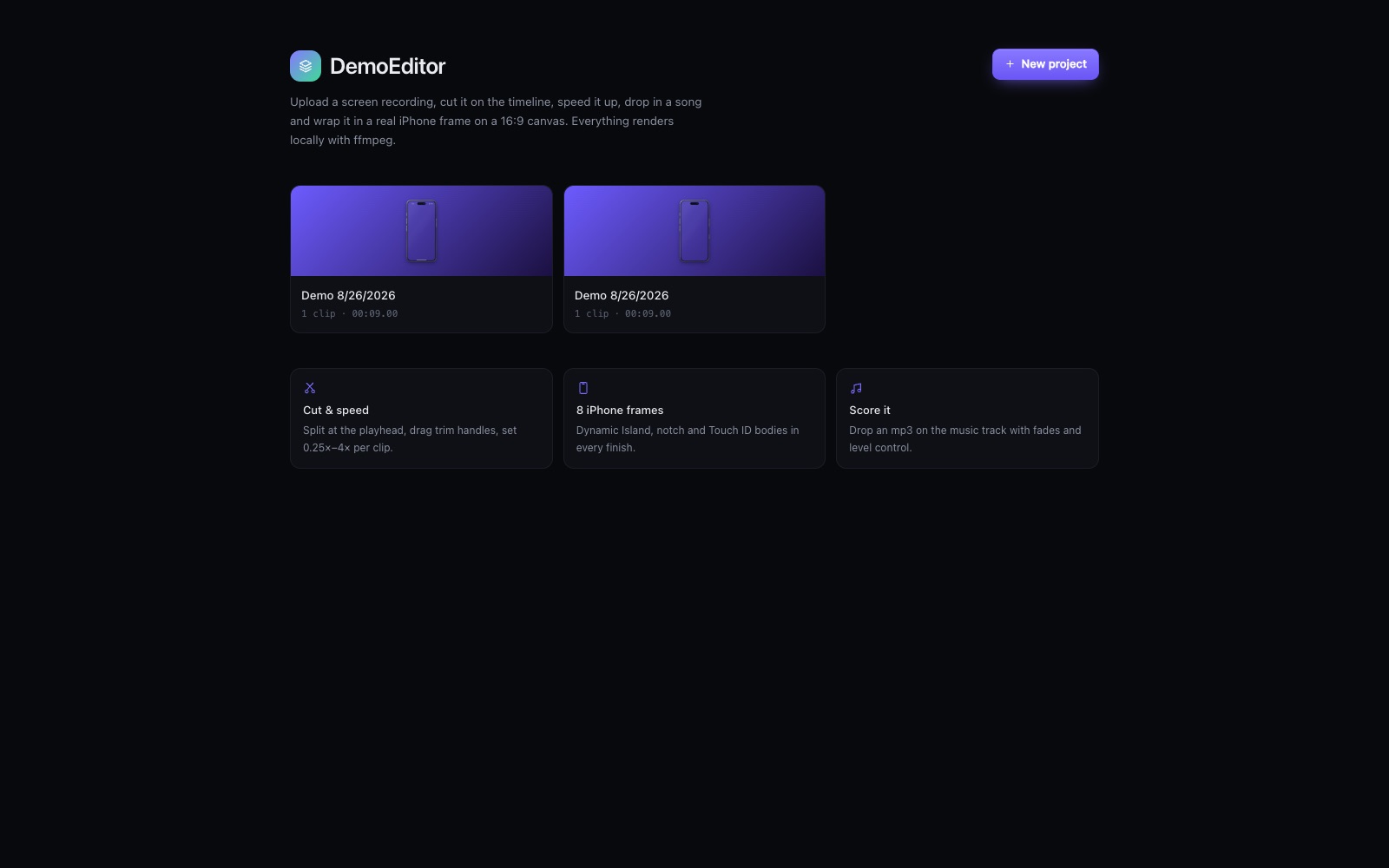 projects